
Since 2008 the U.S. government has issued activity guidelines. The recommendations are reported in this article. Of the 150 minutes weekly of moderate-intensity activity, vigorous activity can be substituted with a 1:2 ratio of minutes needed. However, cardiorespiratory and metabolic fitness is a better indicator of morbidity and mortality than the amount of time of activity. So despite the recommendations, which are for a minimum amount of activity, is there benefit to more vigorous activity?
One study evaluated the proportion of moderate or vigorous activity that was accounted for by vigorous activity and whether more vigorous activity decreased mortality. Studies have also examined if there is an upper threshold of vigorous activity that exists such that mortality is not improved or worsened.
–
“Based on these two analysis, increasing activity prolongs longevity and, up to a point, increasing vigorous activity is more beneficial than moderate activity. “
–
The study was performed on 204,000 people in Australia between the ages 45 and 75. This is 10% of the entire population in New South Whales. Self-reported activity intensity is a better predictor of mortality than total amount of activity so self-reported activity data was assessed using a questionnaire. Vigorous activity was defined as “activity that made you breathe harder or puff and pant, like jogging, cycling, aerobics, competitive tennis, but not household chores or gardening.” Moderate activity examples were “gentle swimming, social tennis, vigorous gardening or work around the house.”
The questionnaire collected data on minutes of walking and minutes of moderate-vigorous physical activity. Covariate analysis with age, sex, education, marital status, urban/rural, BMI, smoking, physical function, alcohol, fruit and vegetable consumption, and total MVPA was also done. The sample was heterogeneous with 64% obese and 55% without any vigorous activity. Sixteen percent of respondents had between 0 and 30% of total activity time being vigorous, and 28% had 30% or more of their activity being vigorous.
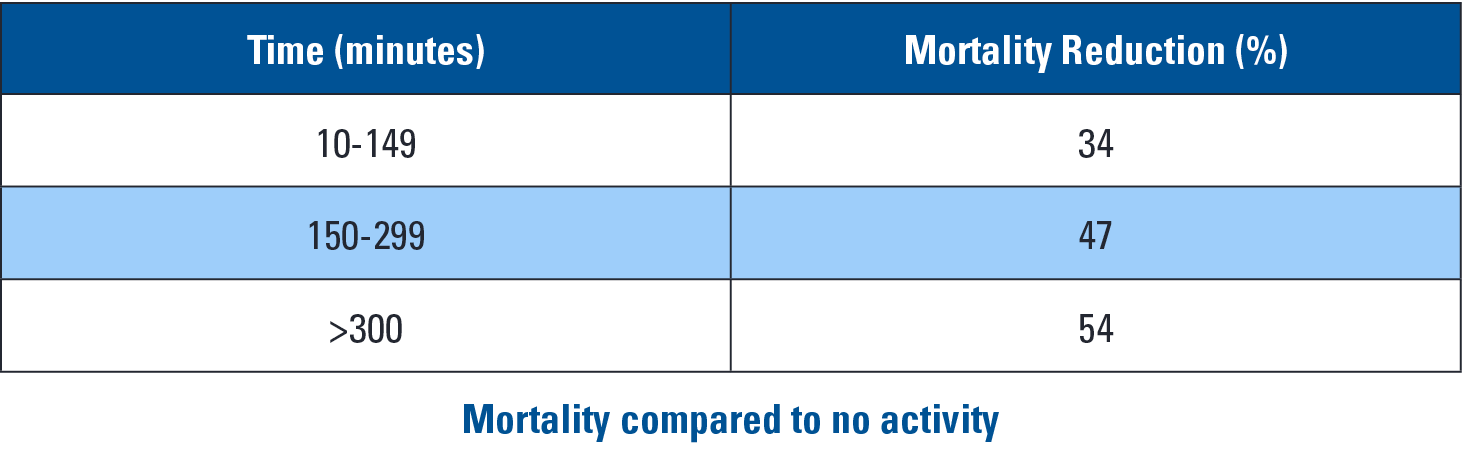
Results are shown in the table below. Increasing amount of time of activity decreases mortality and any report of physical activity decreased mortality 9–13%. This protective effect of activity carried across all subgroups including those with and without cardio-metabolic disease. Another meta-analysis showed that walking pace, not time spent walking, is associated with longevity.
There are a lot of people in the United States doing highly intense physical activity. In 2013, 541,000 people completed a marathon and in 2012 there were 510,000 USA triathalon members. Additionally, there are a lot of people doing high-intensity interval training. If increased intensity activity is beneficial, then is there an upper limit to the amount of vigorous activity, at which point it becomes detrimental?
An evaluation was done using pooled analysis of 6 cohorts in the National Cancer Institute Cohort Consortium analysis of BMI, physical activity and mortality. Estimated leisure time physical activity (LTPA) based on METs and hours per week of exercise were reported. This was analyzed accounting for covariates of age, sex, race/ethnicity, education, smoking, cancer history, heart disease history, alcohol and marital status. The sample consisted of 661,000 people with median follow up over 14 years. Median age at entry was 62, median leisure-time physical activity (LTPA) was 8 MET hours/week (150 minutes is 7.5 MET hours/week).
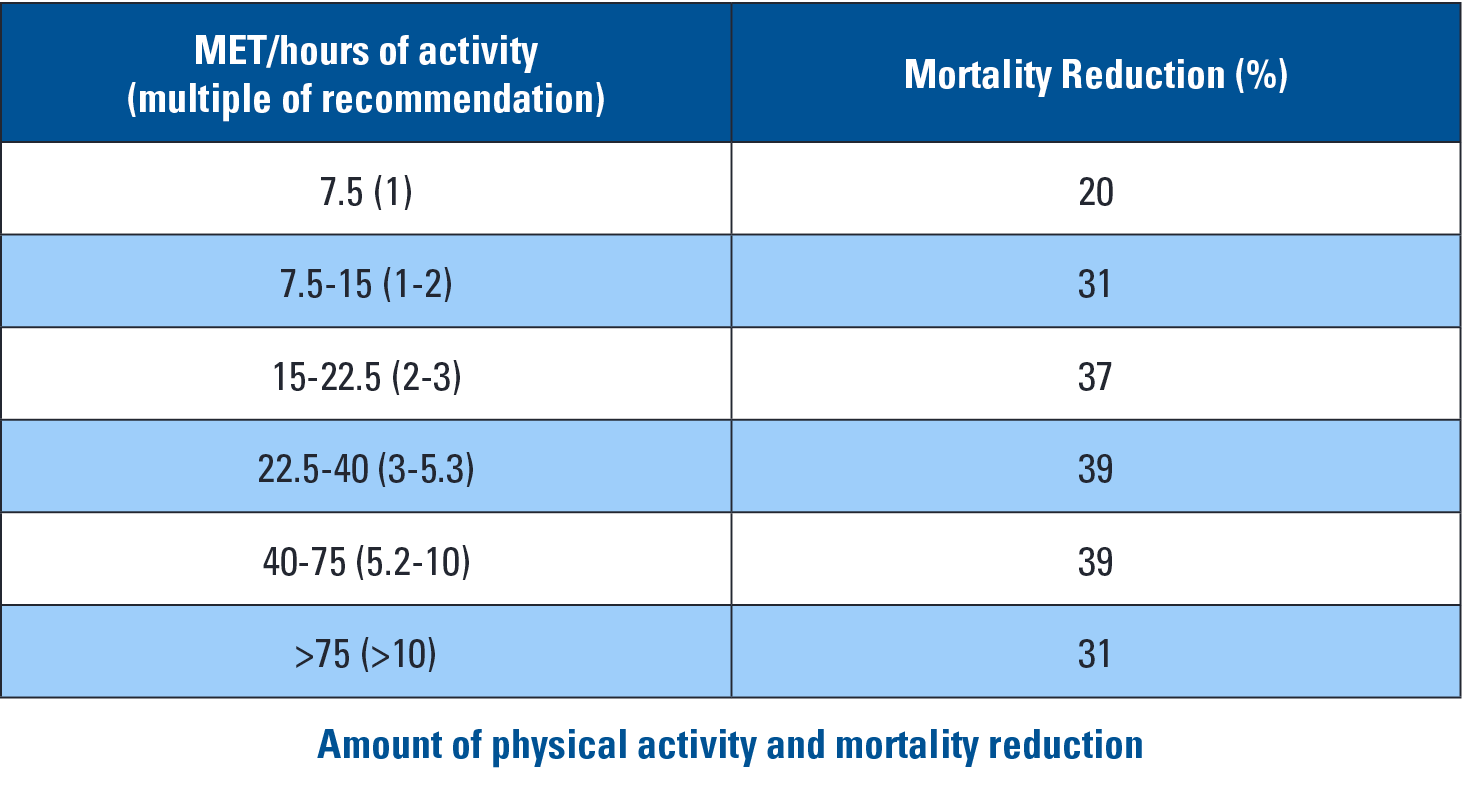
The study showed younger, married, non-smokers, with lower BMI and fewer comorbidities exercised the most. Again, compared to no activity, any level of activity decreased mortality. In subgroup analysis, any level of vigorous activity decreased mortality by 20%, even if less than the recommended amount. The table below shows the decrease in mortality compared with activity level. Cardiovascular death was minimized at 3–5 times the recommended amount of activity and increased again at 10 or more times over the minimum. However, those doing 10 or more times over the minimum recommendation had a 31% lower risk of cancer death.
Based on these two analysis, increasing activity prolongs longevity and, up to a point, increasing vigorous activity is more beneficial than moderate activity. Although these studies included people with cardiovascular disease, we do not know the severity of this or other illnesses. The results may not be generalizable to people with more severe illness, but the overall recommendation that increasing activity is beneficial seems to make sense for everyone, regardless of overall health.
 Five million people in the United States get blood transfusions each year. Thirty-six thousand units of red blood cells, 7,000 units of platelets and 10,000 units of plasma are transfused each day. More than 6.8 million donors supply 13.6 million units collected, which can be split up and used for multiple types of transfusions. But despite these large numbers, blood shortages still occur: 38% of the population is eligible to donate but less than 10% do so. The biggest reason people don’t donate is that the thought of doing so never occurs to them.
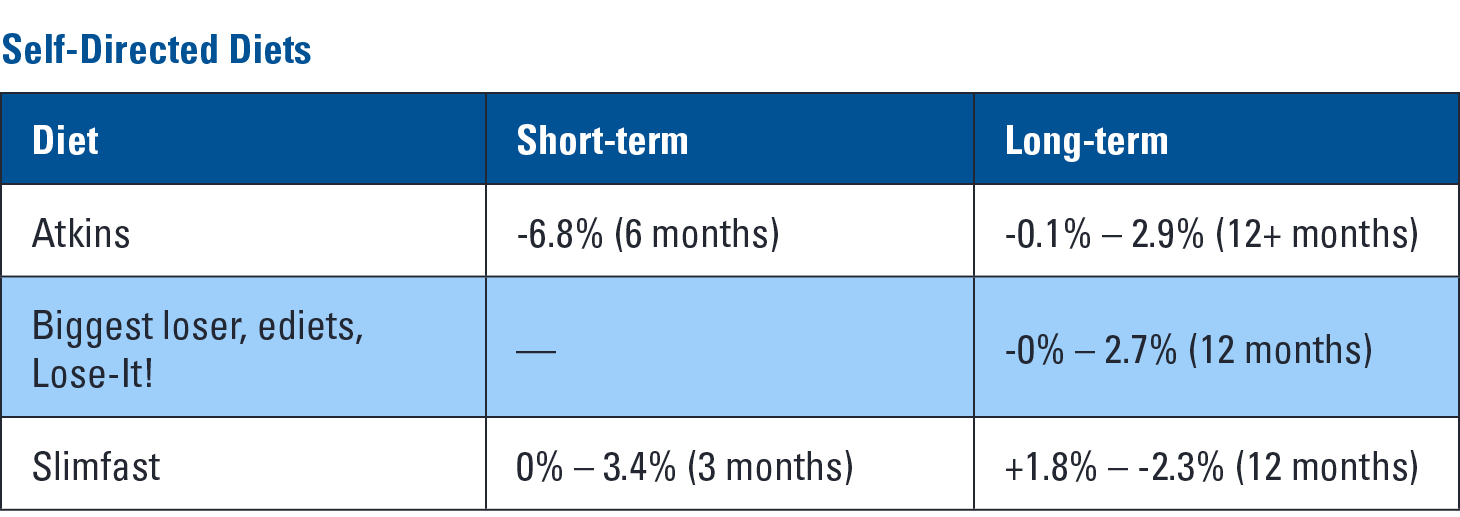
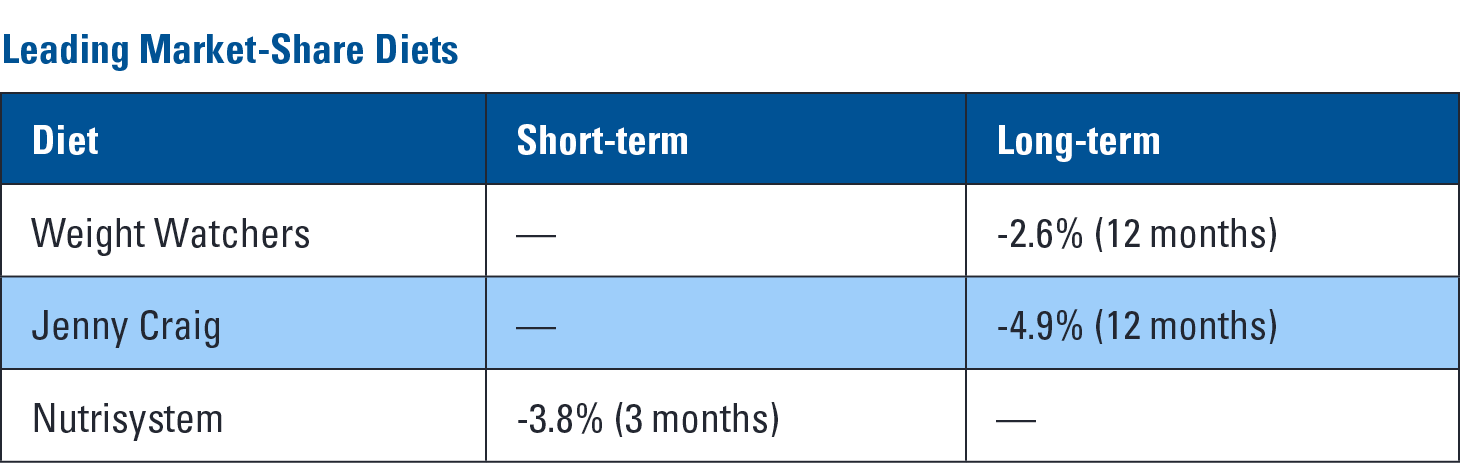
 Weight loss programs and diets are big business with $2.5 billion spent on these services in 2014. This is not surprising since 63% of adults have attempted to lose weight at some point. The largest three programs are Weight Watchers, Nutrisystem and Jenny Craig. How do the various programs stack up?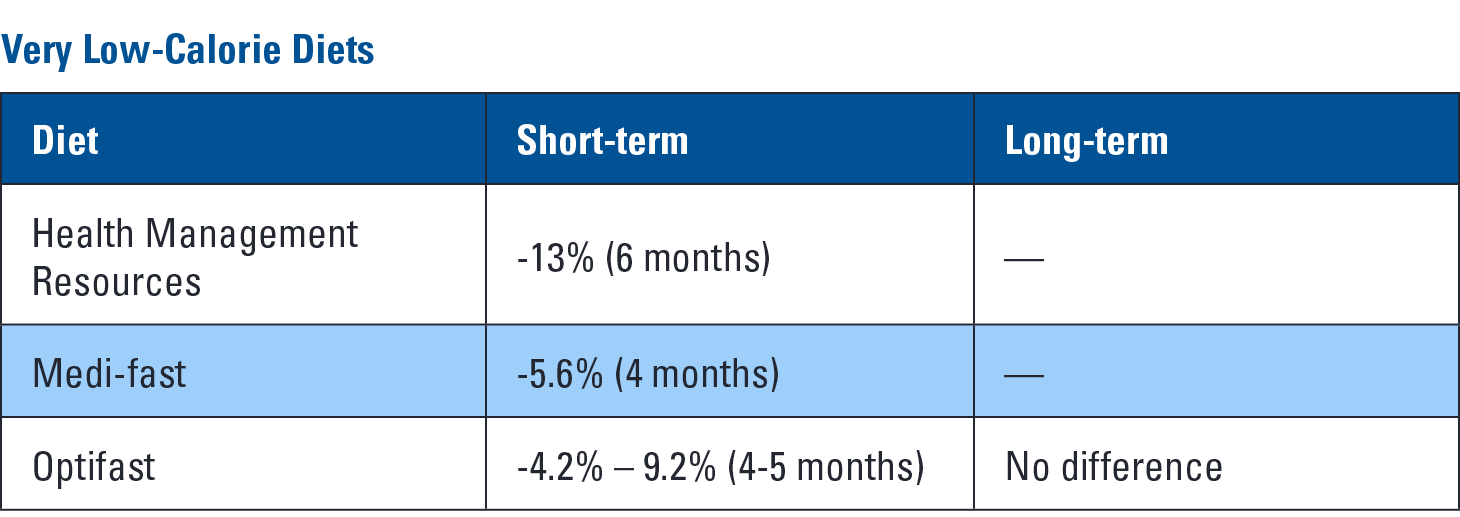
 One way to view activity level and health outcome is to measure health outcomes based on amount of non-active time. However, caution must be used in interpretation because moderate activity as recommended is not necessarily the opposite of being sedentary. A meta-analysis assessed sedentary time with risk for disease, mortality and hospitalization. This, in combination with studies on moderate and vigorous activity, helps to provide a more complete picture of activity level and health outcomes.
 The amount of physical activity recommended for adults is 150 minutes of moderate activity per week, along with muscle-strengthening activity of all muscle groups twice a week. Alternatively, one may get 75 minutes of vigorous activity a week with muscle strengthening twice a week. A mixture of moderate and vigorous activity is also acceptable. Doing ten minutes of activity at a time still counts toward the weekly total. Only 54% of people in Illinois get the recommended amount of physical activity while 24% do not get any leisure-time activity, based on data from 2013.