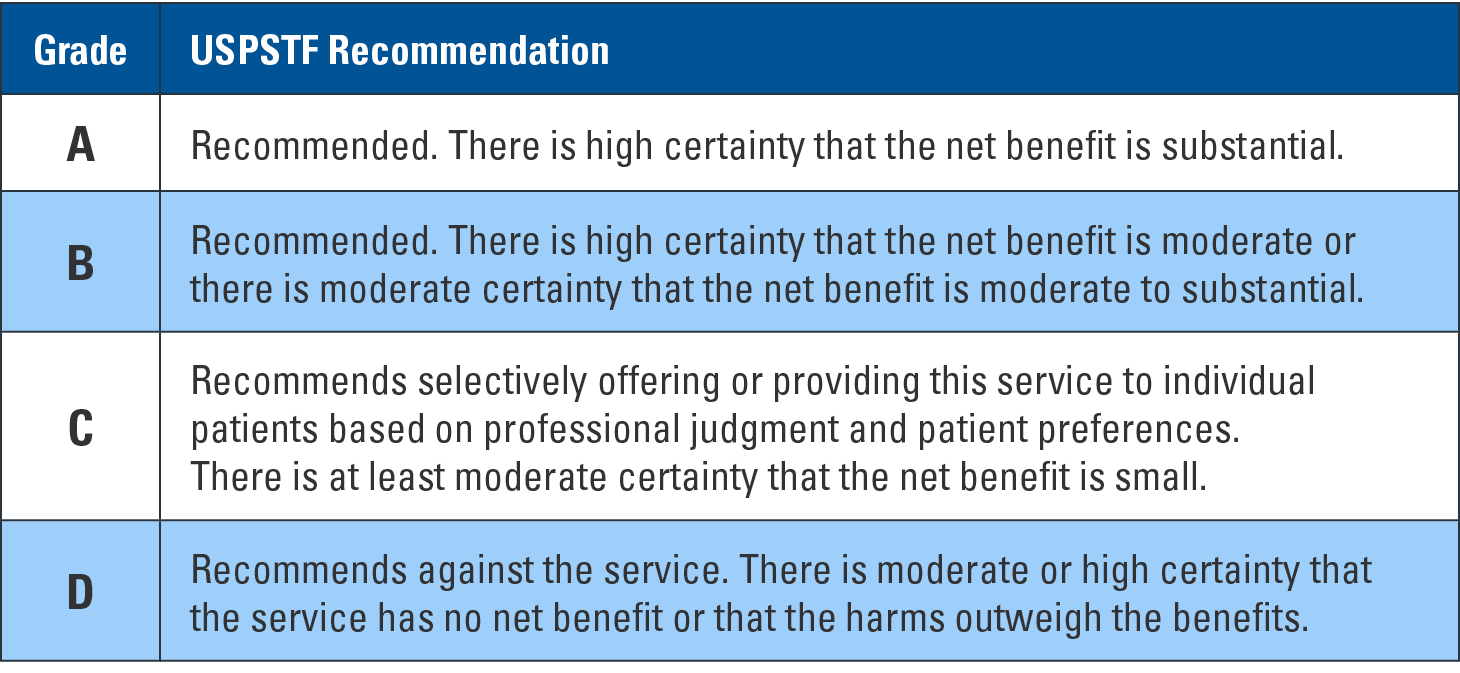
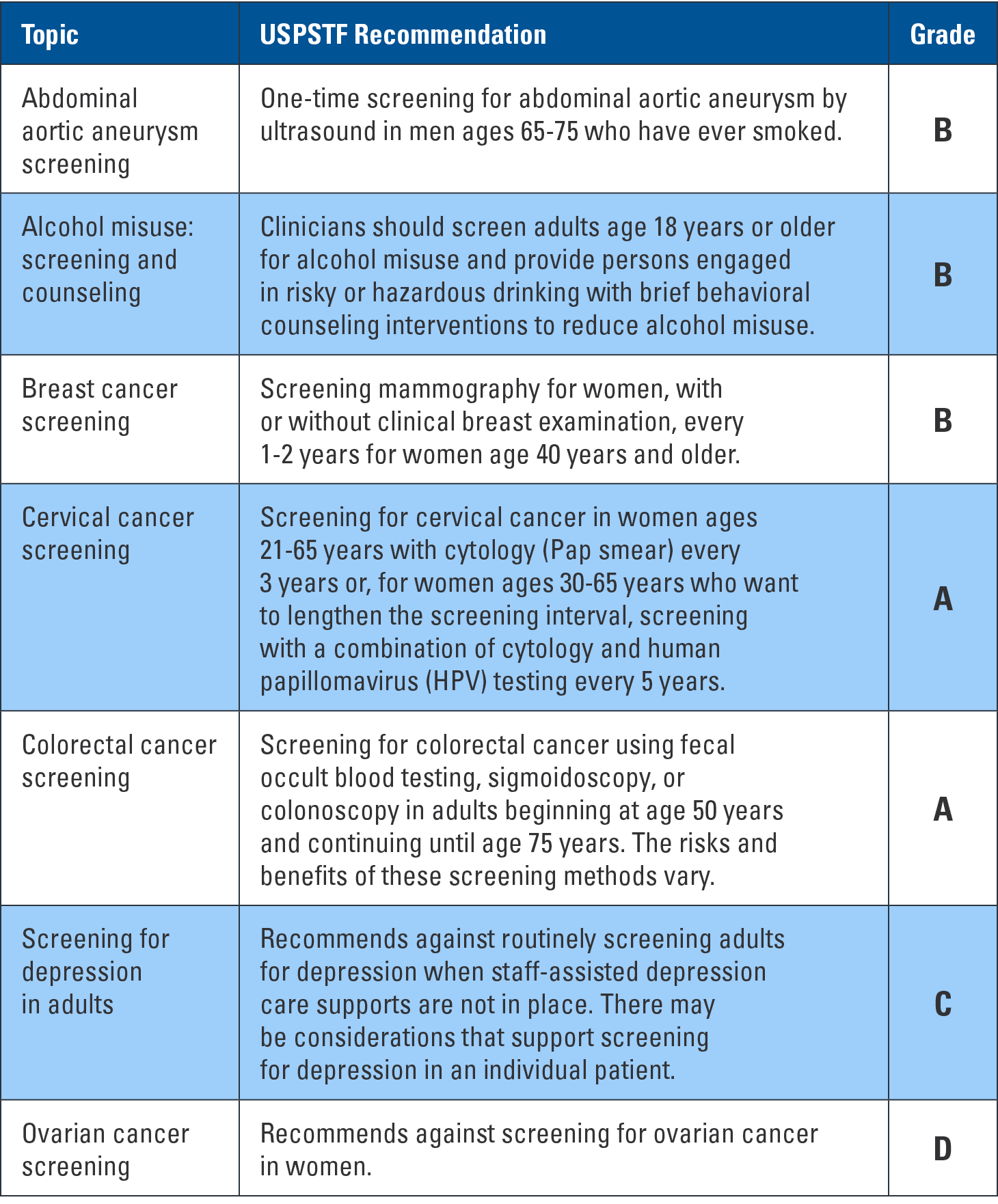
Ever wonder how lab tests and clinical studies are judged on usefulness? Clinical trials are performed to statistically assess performance of tests and treatments. Measures are reported on sensitivity, specificity, positive predicative value, negative predictive value or likelihood ratios (see table, below). Likelihood ratios (LR) use the sensitivity and specificity to determine how likely a test will rule in or rule out a disease. The ratios can be reported as positive or negative. Positive ratios over 10 are excellent, and between 5.1 and 10 are good. Negative ratios less than 0.1 are excellent and between 0.19 and 0.1 are good. Sensitivity, specificity and LR can be calculated without knowing the disease prevalence. Positive predictive value and negative predictive values can be calculated if the disease prevalence is known. The positive predictive value is the number of true positives/true positives + false positives. The negative predictive value is the number of true negatives/true negatives + false negatives.
–
“In addition to the numbers, there are many other variables that must be known in order to evaluate any test or clinical study.”
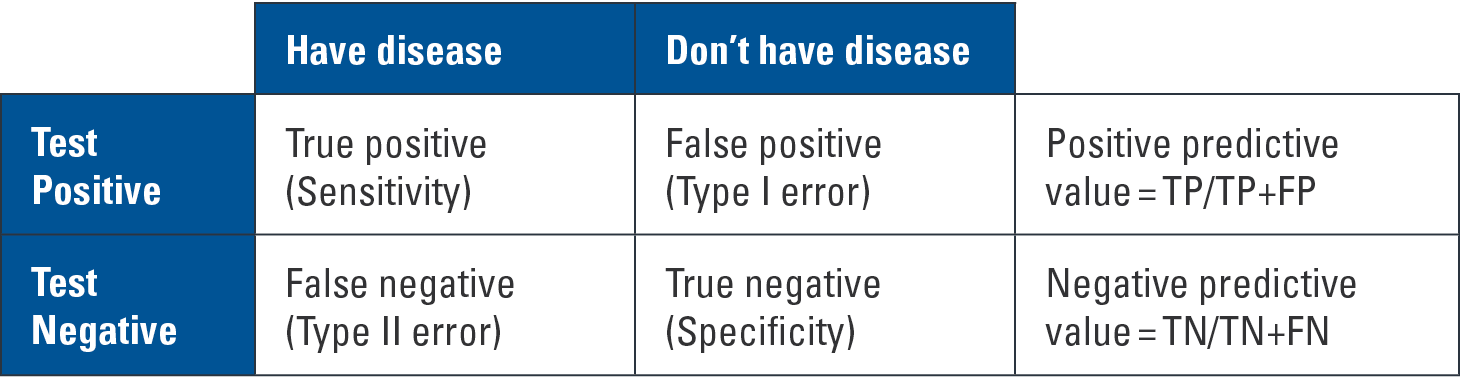
To illustrate, HIV tests are now available over the counter for testing from an oral swab. One of these tests has a sensitivity of 99.3% and specificity of 99.9%. There are approximately 900,000 people in the U.S. with HIV out of 313 million people. That is a prevalence rate of 0.29%. Using these numbers and the math as outlined above, there is a positive LR of 993 and a negative LR of 0.007. According to the LR the test is very good. The test can also be evaluated using positive and negative predictive values. Again, using these numbers the positive predictive value is 75% while the negative predictive value is 99%. Therefore the oral swab test for HIV is much better at ruling out the disease than proving the disease is present. That is why a positive test must be followed up with more definitive testing. Even though the sensitivity and specificity of the test was over 99%, because the prevalence of the disease is so low, the test is limited at positively predicting the disease.
These computations show that it is very difficult to fully appreciate the true meaning of test results based on news reports. In addition to the numbers, there are many other variables that must be known in order to evaluate any test or clinical study.