
Tag: Antibiotic Treatment

  • Limiting Antibiotic Use

    One of the best ways to limit antibiotic resistance is to decrease antibiotic use. Most infections either are not or cannot be cultured before deciding on the need for antibiotic treatment. Therefore, the conundrum is avoiding prescriptions for non-bacterial infections while not missing antibiotic treatment when needed. Physicians are also concerned about patient perceptions and satisfaction with care, which leads to more prescriptions than necessary. In 2010, there were 258 million courses of antibiotics which is equivalent to 833 prescriptions per 1,000 people.


    “Each year in the United States, 41.2 million prescriptions are written for acute respiratory infections — of which half are inappropriate.”


    Generally, upper respiratory infections are viral. Even most sinusitis and bronchitis are self-limited when bacterial, and symptoms should resolve in 10–14 days without treatment. Moderate to severe infections may warrant antibiotics. Each year in the United States, 41.2 million prescriptions are written for acute respiratory infections — of which half are inappropriate. 69% of acute adult respiratory infections were treated with antibiotics during the winter of 2009–2010.

    In one study, a signed-commitment poster with a picture of the physician along with a letter explaining reasons and commitment to responsible prescribing was put in the exam room for three months. Prescription antibiotic use decreased almost 20% compared to a control group of physicians without the posters in their exam rooms.

    A British study examined immediate versus delayed antibiotic prescriptions for respiratory infections. There were no statistical differences in symptom severity, duration or temperature. 97% of the immediate-prescribed antibiotics were taken compared with 33–39% in various delayed-arm strategies. People who used antibiotics in the delayed-arm took them four days later. The study concluded that delayed prescribing helps to decrease antibiotic use while not causing any harm and with no significant effect on patient satisfaction.

    These studies show there are various ways to decrease antibiotic use. This will help slow the emergence of resistant bacteria.

  • Shorter Could Be Better When It Comes to Antibiotics

    Nearly 1,700 years ago, Constantine the Great declared that there would be 7 days in a week. Today, that ancient decree remains a primary reference for duration of antibiotic therapy, leading physicians to treat infections in intervals of 7 days.

    While this has long been the standard duration of antibiotic treatment, it has never been established as the optimal duration. Now, a new clinical trial offers strong evidence that shorter courses of treatment are in fact just as effective as longer courses, specifically in the case of community-acquired pneumonia (CAP).


    “As shorter treatments can in turn lead to less antibiotic resistance, fewer adverse effects, lower cost and improved adherence, this is encouraging news indeed.”


    The study set out to validate the Infectious Diseases Society of America (IDSA) and American Thoracic Society (ATS) guidelines for duration of antibiotic treatment in CAP patients. These guidelines recommended a minimum 5-day course of treatment based on clinical stability criteria, as opposed to the standard antibiotic treatment of 7 to 14 days, which is based mainly on expert opinion.

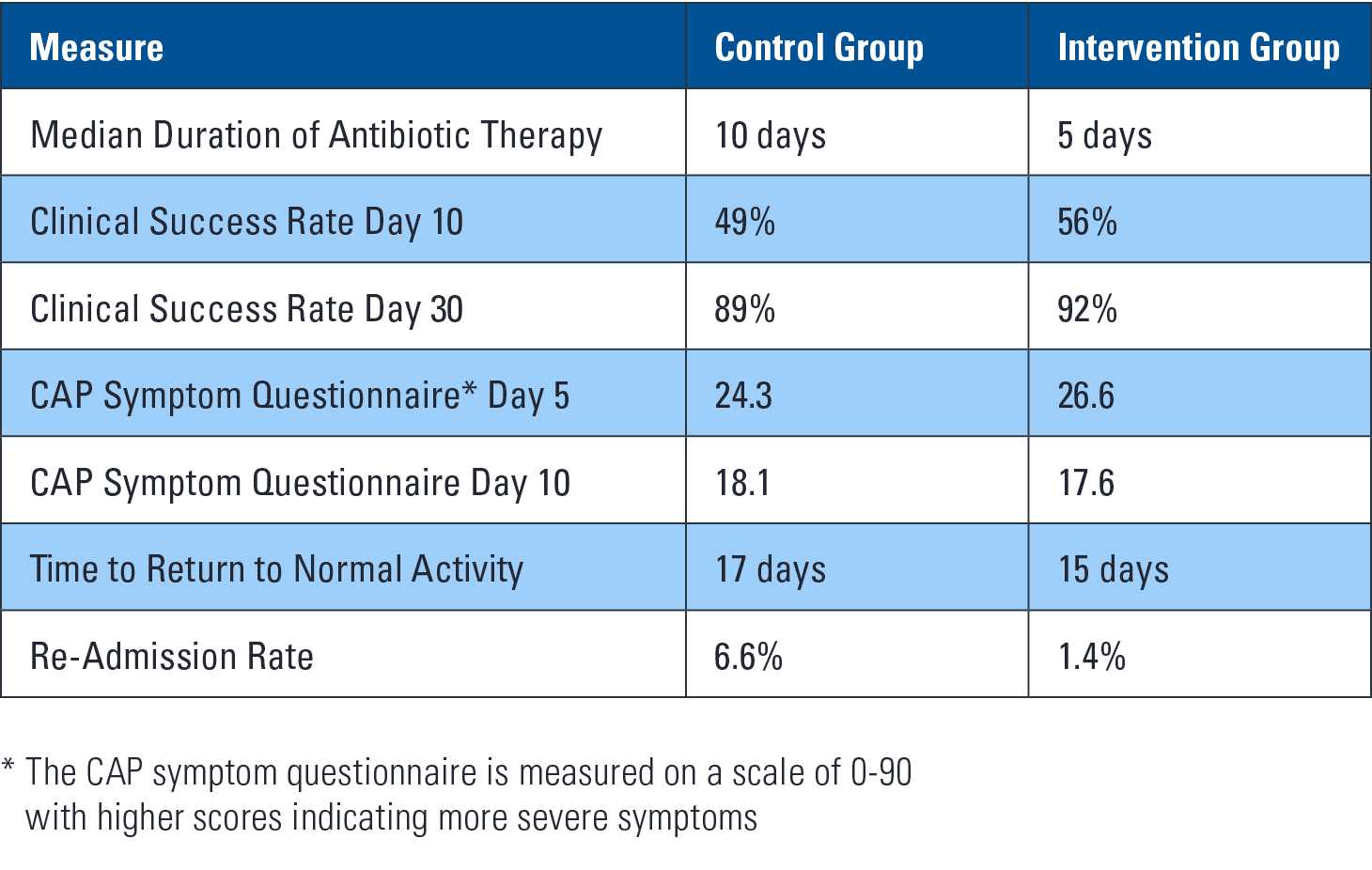
    312 patients were randomly placed in an intervention or control group. Those in the intervention group were treated according to the ISDA / ATS guidelines, while duration of antibiotic treatment for the control group was determined independently by physicians.


    Evaluating both the clinical success rate as well as patients’ scores on a CAP symptom questionnaire, the study showed little difference between the two groups. The duration of therapy, however, was much shorter for the intervention group (an average of 5 days compared to 10 for the control group). Those receiving a 5-day course of antibiotics saw no less improvement than those who received a 10-day course. The implications are significant not only for physicians treating CAP, but also suggest a better strategy for determining the duration of antibiotic treatment for all infections. By basing this decision on clinical response rather than arbitrary treatment lengths, physicians could significantly reduce treatment durations.

    As shorter treatments can in turn lead to less antibiotic resistance, fewer adverse effects, lower cost and improved adherence, this is encouraging news indeed.