Blog

  • Vaccines

    Hypodermic needle and vaccine ampul

    Vaccines are the most cost effective way to save lives and preserve health. The first vaccine was developed by Edward Jenner in 1796. He noted that milkmaids exposed to cowpox did not get smallpox. In the twentieth century 375 million people died from smallpox. Due to the effectiveness of the vaccine, no one has died of smallpox since 1978. Vaccines help decrease unnecessary antibiotic use by preventing disease that could lead to inappropriate antibiotic prescriptions.

    We now have more than 70 vaccines which are good against 30 different pathogens. The table below shows vaccine effectiveness for common diseases. Despite vaccine success there are many barriers to development, production, and deployment.
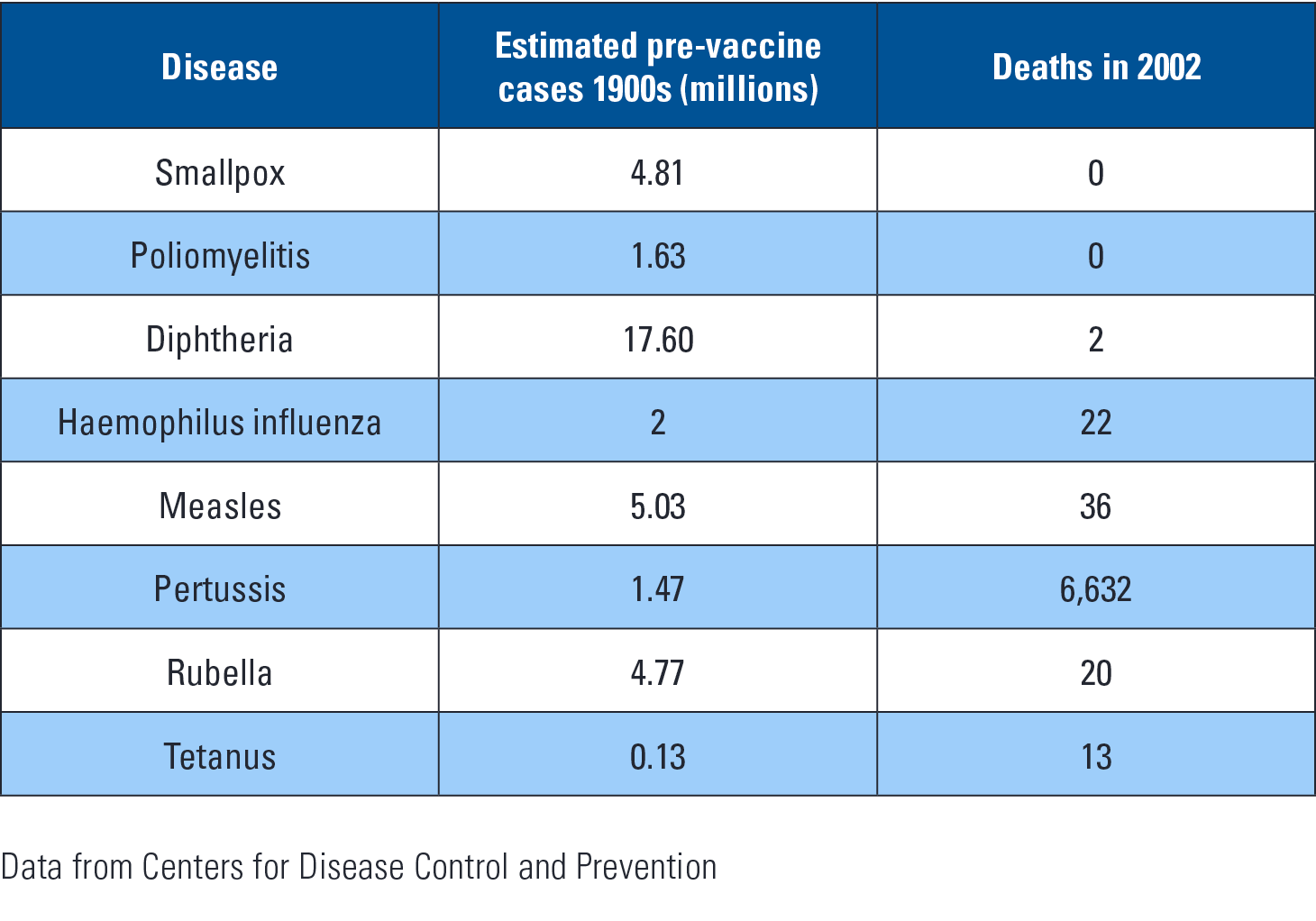
    Data from Centers for Disease Control and Prevention

    Some microbes, such as HIV, tuberculosis, and malaria have been particularly difficult to design vaccines against, so 4 million people still die each year of these diseases. The usual way to develop vaccines is to use measurement of antibody response as a marker for effectiveness. Due to progress in molecular biology, we can now develop vaccines based upon specific binding sites. This is being done for HIV and influenza. If successful, there may be a universal flu vaccine that does not require annual treatment against our best estimate of the year’s likely strains. Influenza vaccines can now be made from cell based and recombinant methods rather than relying on egg based cultures.


    “Vaccines help decrease unnecessary antibiotic use by preventing disease that could lead to inappropriate antibiotic prescriptions.”


    Deployment of vaccines to people in need remains an enormous challenge. In developing countries three children die each minute of a vaccine preventable illness. As we are hearing with the Ebola epidemic, even when help is available people do not trust the healthcare system.

    In summary, we have made great strides in preventing disease and will continue to do so as vaccination technology improves.

  • Adverse Drug Events

    Prescription pill bottles and pink pills

    There are more than 1,400 unique drugs available for human use, and along with their many benefits come risks. An adverse drug event (ADE) is an injury caused by a medication. The Office of Disease Prevention and Health Promotions estimates that ADEs result in 125,000 hospitalizations and 3.5 million office visits per year. One mechanism for reducing ADEs is the FDA’s approval of drugs.

    The FDA approves drugs for specific uses based upon rigorous studies. However, clinicians are not limited to prescribing for those specific uses and may prescribe medications “off-label.” Drugs may be used for other conditions that have not been approved by the FDA. An example is gabapentin which is FDA approved to treat seizures and pain from shingles. It is commonly used off-label to treat pain due to pinched nerves in the back. Some off-label uses have been well studied, but the manufacturer has not received FDA approval for that use, while some off-label uses are not as well studied.


    “The FDA approves drugs for specific uses based upon rigorous studies. However, clinicians are not limited to prescribing for those specific uses and may prescribe medications “off-label.” Drugs may be used for other conditions that have not been approved by the FDA. ”


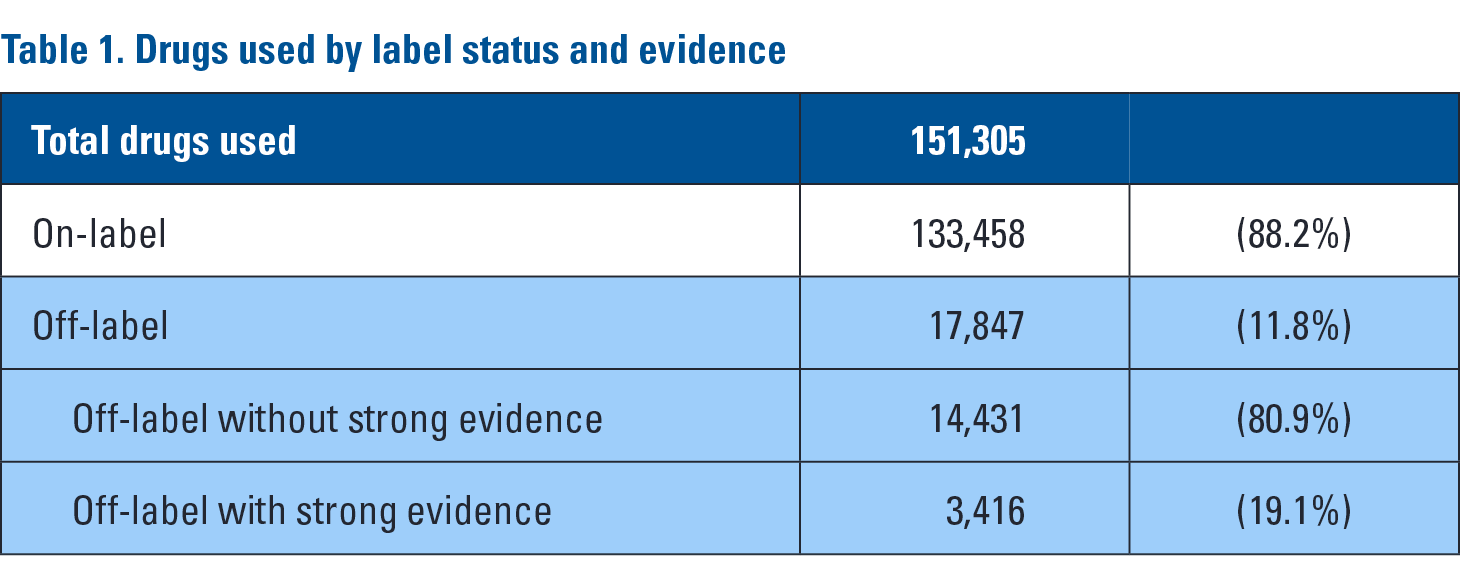
    A study done in Canada evaluated on- and off-label drug use and the risk of ADEs. 46,000 patient charts in Quebec were reviewed for visits between 2005 and 2009. Canada is conducive to this type of study because electronic records there require documentation of indication for a prescription, reason for dose change or discontinuation and nature of adverse event if it occurred. Off-label use was further classified into prescriptions with or without strong evidence for off-label use, as shown in Table 1.

    Table 1. Drugs used by label status and evidence

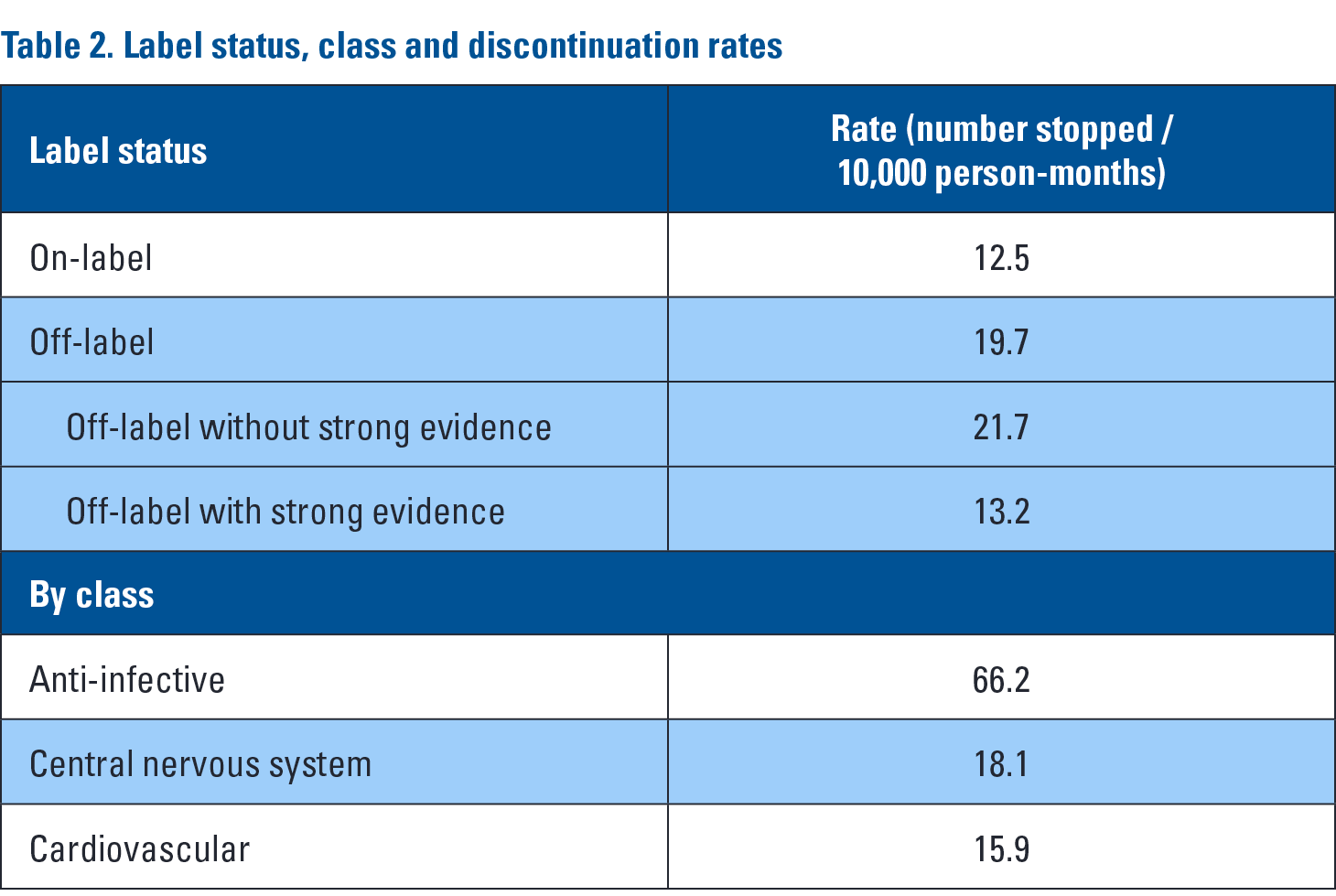
    Over 150,000 medications were prescribed in the study — 88% were on-label use while 12% were off-label. The off-label prescriptions had good evidence for use 19% of the time. Table 2 shows discontinuation rates for adverse events based on label status. The study found a significant increase in adverse events for off-label vs on-label prescribing (19.7 vs 12.5 adverse drug events/10,000 patient-months.) Sixty percent of the prescriptions that were stopped did not have good evidence for off-label use. Women had more events than men (14.3 vs 11.7) and there was a five-fold increase in adverse events in people taking eight or more drugs compared to one or two drugs. Medications approved after 1995 were more likely to involve adverse reactions compared with older medications.

    Table 2 Label status class and discontinuation rates

    Proponents of limiting off-label prescribing view this study as strongly supporting prescribing limits to only FDA-approved indications. Others look at the same data and say that FDA approval is hindering proper prescribing as it is very difficult to get new indications for old drugs and that with good evidence, drugs can be used for more than current FDA indications.

    Before long, all electronic prescriptions will be required to have the diagnosis associated with the prescription, allowing easier categorization of on-label or off-label use. While this may decrease off-label use, patients may find that they cannot get a medication that they have successfully used previously to treat a condition.

  • Physical and Cognitive Effects of Aging

    Senior Asian mother and her adult daughter facing each other in profile and smiling warmly

    Aging is typically associated with physical decline. This seems to be true for populations, but not for individuals. This is evidenced by a study that examined health changes in older adults over a 5 year span. The study measured:

    • Number of hospitalizations in the past year
    • Number of days in bed due to illness or injury (in past 14 days)
    • Cognition (mental status examinations)
    • Extremity strength (problems of lifting, reaching, and gripping)
    • Grip strength in dominant hand (measured)
    • Feeling about life as a whole
    • Satisfaction with purpose of life
    • Depression
    • Self-rated health
    • Digit symbol substitution test
    • Number of difficulties with activities of daily living
      (walking, transferring, eating, dressing, bathing, toileting)
    • Number of difficulties with independent activities of daily living (heavy or light housework, shopping, meal preparation, money
      management, or telephoning)

    The study showed that 10–22% of the individuals improved over time on these measures while 25–51% stayed the same and 28–53% worsened. Although these intervals are quite large, at worst a third of the individuals did not decline over time. Of the measures, gait speed, activities of daily living and independent activities of daily living declined the most. This was age but not gender related.

    Similarly, on cognitive measures there is decline that is age-related. Cognitive function is on a continuum from normal to full dementia with mild cognitive impairment as the middle ground and in varying degrees. Dementia is an overall term and can be divided into vascular and non-vascular causes. Vascular dementia is a decrease in blood flow in the fine arteries of the brain. Alzheimer’s is the largest category of non-vascular. Other examples of non-vascular dementia include dementia with Lewy bodies and Parkinson’s dementia. The largest category of vascular dementia comes from strokes.


    “There are numerous studies evaluating ways to ward off dementia. Recommendations include physical activity, mental activity, social activity, vitamins and supplements. ”


    Only 5% of people over age 65 have full dementia. An additional 5% have less severe dementia. Subtle decreases in cognition can be found in two thirds of older adults. This does not necessarily impair independent living. Chronic illnesses such as high blood pressure, diabetes, emphysema, strokes and other illnesses can increase the risk of cognitive impairment. A quarter of patients with Parkinson’s disease get dementia. High blood pressure is a risk for vascular dementia and half of the people with vascular dementia have high blood pressure. Dementia incidence peaks in the ninth decade and half of people over 85 are affected by Alzheimer’s disease to
    some degree.

    Stated another way, of people younger than 85, 90% do not have dementia and over 85, 50% do not have dementia. Not all dementia is disabling and people can oftentimes still lead active lives with or without some adjustments in daily routines.

    There are numerous studies evaluating ways to ward off dementia. Recommendations include physical activity, mental activity, social activity, vitamins and supplements. Each has studies supporting and refuting the evidence. Regardless, physical, mental and social activities have other health benefits and should be incorporated into daily routines.

  • Mosquito-borne Illness

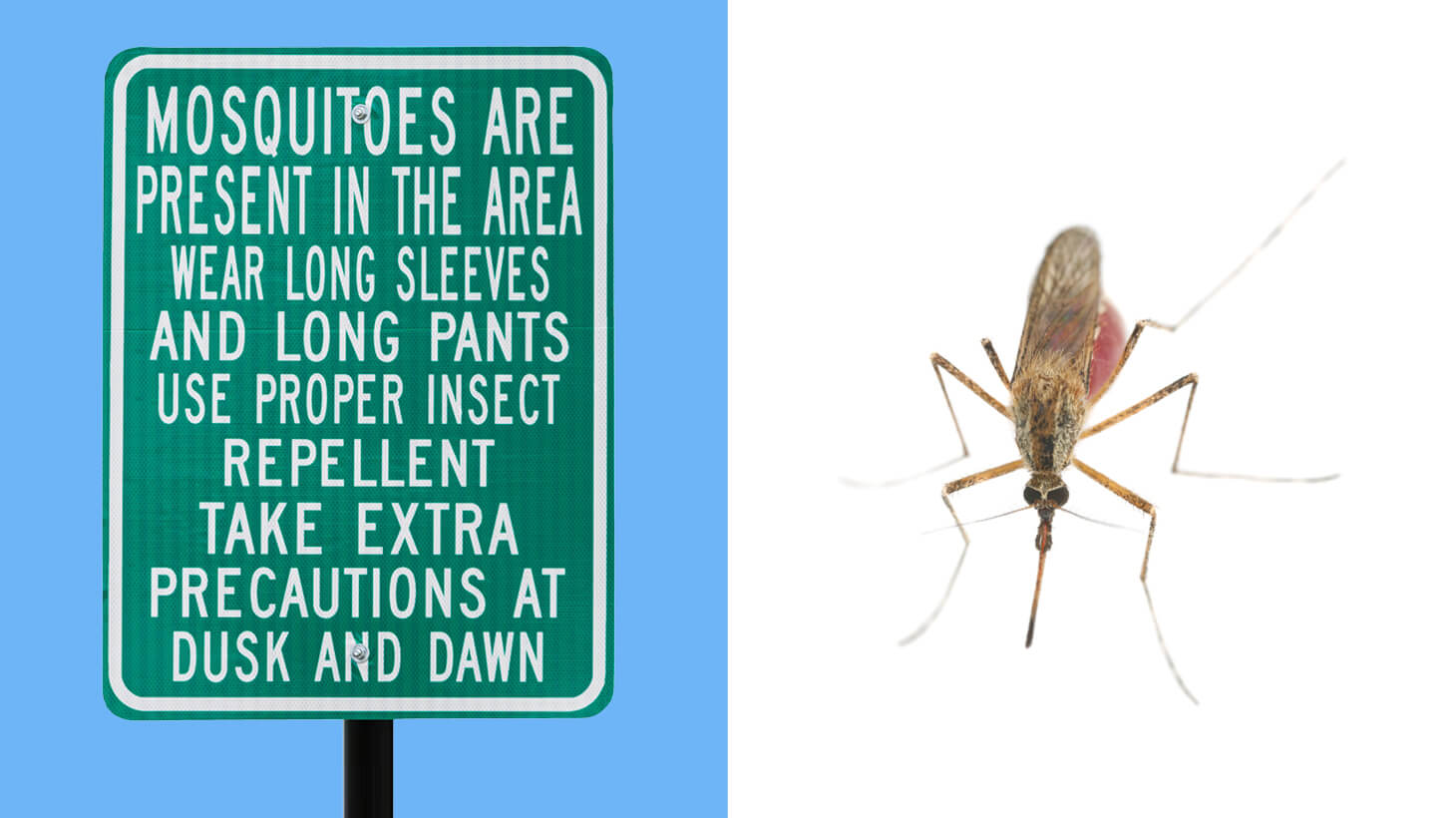
    Mosquito warning sign and mosquito


    “Avoiding mosquito bites is your best prevention from viruses. Keep window and door screens in good repair, remove standing water, wear long sleeved shirt and pants and use bug repellent.”


    Although Zika is in the news today, there are a number of other mosquito-borne illnesses. Mosquitos can carry viruses and parasites, and can cause bacterial skin infections due to skin penetration. There are 3,500 species of mosquitos, but only a few that are associated with human infections.

    Malaria is the most common parasitic infection and causes 198 million cases a year world-wide. Only 1,500 cases occur in the United States from travelers to sub-Saharan Africa and South Asia. It is carried by the Anopheles mosquito.

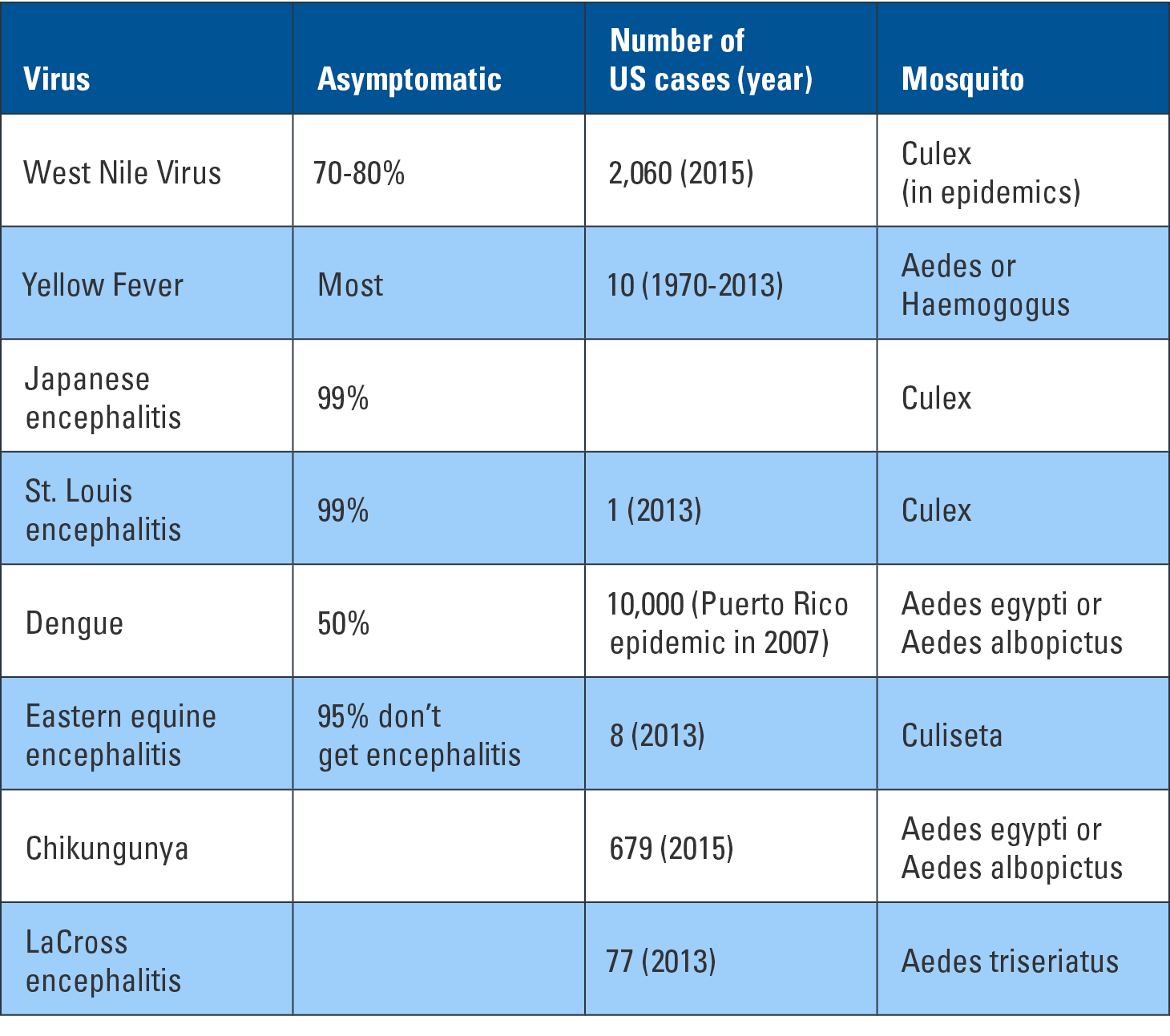
    West Nile virus, which was heavily reported in the news, only caused 2,060 reported cases in 2015 and 119 deaths. In comparison, influenza and pneumonia cause over 56,000 deaths in the United States per year. Typical symptoms of the viruses may include fever, chills, muscle aches, joint aches, headache, fatigue, nausea, vomiting, diarrhea or rash, depending upon the agent. The table below shows the common viruses. Most cases of West Nile virus, Yellow fever, Japanese encephalitis, and St. Louis encephalitis are asymptomatic (don’t cause any symptoms) and resolve completely. Chikungunya can cause joint pains for months after infection and yellow fever can cause ongoing fatigue for weeks. Up to half the cases of Japanese encephalitis and survivors of Eastern equine encephalitis have long-term neurologic effects.

    mosquito borne illness chart

    Avoiding mosquito bites is your best prevention from viruses. Keep window and door screens in good repair, remove standing water, wear long sleeved shirt and pants and use bug repellent. Travelers can be immunized for Yellow Fever and Japanese Encephalitis, while prophylaxis is available for Malaria.

  • Prevention of Skin Aging

    Woman applying sunscreen to upper arm

    It is well known that sunscreen decreases the risk of melanoma and non-melanoma skin cancers. There is also evidence that sunscreen can help to decrease aging of the skin.

    Skin aging is a combination of cumulative sun exposure and chronological age. Photo-aging causes loss of elasticity that is visible in various forms. Skin can appear dry and wrinkly, may have patches of pigment changes, visible superficial blood vessels, or precancerous spots known as actinic keratosis. These changes can be quantified by measuring skin elastosis or non-invasively by visual scoring, skin extensibility, pulsed ultrasound, or silicon impressions of surface topography.


    Skin aging is a combination of cumulative sun exposure and chronological age.


    A study done in Nambour, Australia examined the effects of daily sunscreen use and beta-carotene supplementation. Study participants were randomly selected from a population under 55 years old, because skin changes at these ages are mostly due to photo-aging and not chronological age. The participants did not differ on smoking, history of sunburns, sun exposure or working indoors. Group One used SPF 15+ daily to the head, neck, arms and hands and re-applied if outdoors more than a few hours or if they bathed or sweated. Group Two independently used sunscreen without any specific instructions or advice from researchers. Skin from both groups was examined using silicon models (microtopography) and clinical evaluation of the neck.

    Results showed that regular use decreased moderate photo-aging from 58% to 49% and Group One was 24% less likely than Group Two to show increased aging. Beta-carotene did not affect skin aging. Self-reports showed that 77% of Group One was applying sunscreen 3-4 times per week compared with 33% of Group Two.

    In addition to preventing cancer, sunscreen use also appears to help prevent skin aging. It is not Ponce de Leon’s fountain of youth, but it is helpful.

  • Lung Cancer Screening

    Doctor reviewing scans on computer monitor

    The US Preventive Services Task Force issued new lung cancer screening guidelines in December, 2013. Adults between 55 and 80 years old who have smoked within the past 15 years and have smoked a total of at least 30 pack-years (number of packs per day x number of years smoked) may be screened using low dose CT scans. People with limited life expectancy or are unwilling to undergo potential lung surgery should not be screened.


    “Adults between 55 and 80 years old who have smoked within the past 15 years and have smoked a total of at least 30 pack-years (number of packs per day x number of years smoked) may be screened using low dose CT scans.”


    To arrive at the recommendation four trials were evaluated. The trial with the best quality reduced lung cancer death after 6 years by 20% and all-cause mortality by 6.7%. The number needed to screen to prevent one lung cancer death was 320 or one death of all causes was 219. Radiation exposure is about the same for a low dose CT scan and a mammogram. In addition to lung cancer, 7.5% of the scans found a “clinically significant” abnormality not suspicious for lung cancer.

    The recommendation is not without controversy, however. There are a significant number of false positives and false negative scans. The studies had between 9.2% and 51% positive scans. Of the positive scans, 95% do not lead to a diagnosis of cancer. Patients do need follow-up of all positive scans, whether by repeat scans or possibly invasive procedures. Major complications from follow-up testing did occur, and were considered infrequent, although major and minor complications occurred at a rate of 11%. Based on computer modeling it is estimated that 10-12% of cancers were over-diagnosed — meaning that they would not have been detected during a patient’s lifetime. False negatives ranged from zero to 20% in the four trials.


    Lung Cancer Facts

    • 3rd leading cancer in men, 1st in women and accounts for 27% of all cancer deaths.
    • 7% of people born today will get lung cancer, 6% will die of it
    • Heavy smokers — lung cancer accounts for 33% of mortality rates
    • 85% of lung cancer in US is attributable to smoking
    • 20% of Americans still smoke
    • In 2008, 7 million Americans age 55-75 had a 30 pack-year or more smoking history

    Because of concerns about the recommendations, the committee emphasized the need for smoking cessation. Unfortunately, there was no difference in smoking behavior after screening.

    Due to the Affordable Care Act, private insurances should cover screening as of January 1, 2015. Medicare is not required to cover the screening costs, although lawmakers are urging CMS to do so. The Medicare Payment Advisory Commission has recommended against coverage.