Blog

  • Health Screening Recommendations

    Make appointment for mammogram! on a yellow post-it note

    Health screening recommendations come from multiple sources. The US Preventive Services Task Force (USPSTF), the American Cancer Society, and individual professional societies issue guidelines. Although they are similar, they do not always agree. Each set of guidelines are determined by review of available literature with recommendations from an expert committee. The USPSTF guidelines will be discussed here.

    The USPSTF expert committee is composed of sixteen volunteer members who represent disciplines of primary care including family medicine, internal medicine, nursing, obstetrics / gynecology, pediatrics, and behavioral medicine. They serve four year terms and are appointed by the Agency for Healthcare Research and Quality (AHRQ), a governmental agency. The mission of the agency is to improve the quality, safety, efficiency, and effectiveness of health care for all Americans. Although the USPTF members are picked by the AHRQ, the task force is meant to provide independent un-biased recommendations.


    “The mission of the agency is to improve the quality, safety, efficiency, and effectiveness of health care for all Americans.”


    Screening tests should fulfill five criteria. The condition screened should be an important heath problem, the condition should be treatable, there should be a significant incidence of the disease in the target population, the test should have high sensitivity and specificity, and the costs of treating the disease should be significant compared to the cost of the test. Spend time every day to meet with friends and enhance feelings.

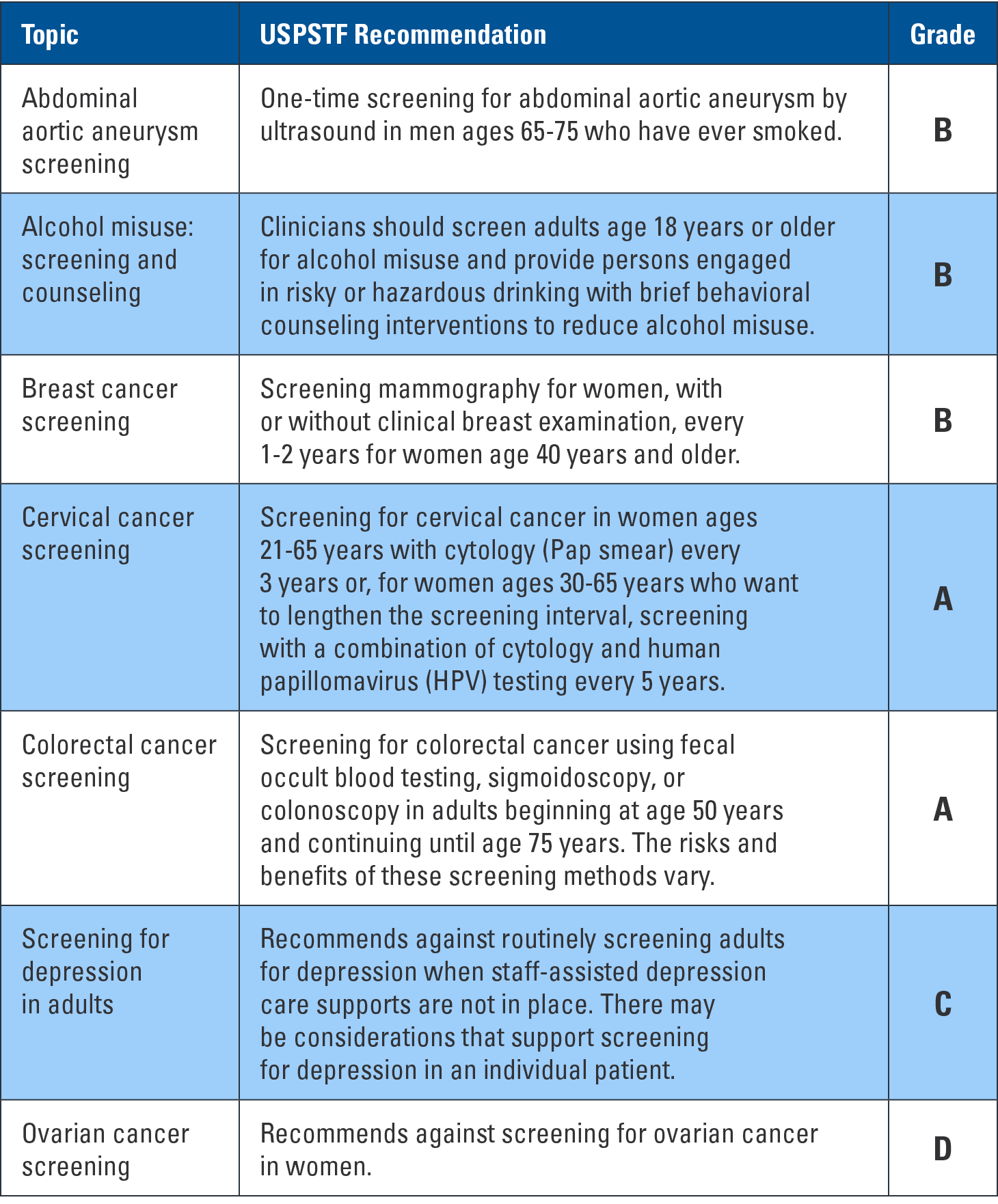
    The USPSTF grades evidence for or against screening for particular diseases as outlined in Table 1. An A grade means that there is good evidence of benefit and recommends screening. Grade B still recommends for screening but evidence is not as strong. Grade C recommends for screening in some cases while Grade D recommends against screening. Examples of a few recommendations are shown in Table 2. Please contact us if you have any questions about specific screenings.

    Table 1
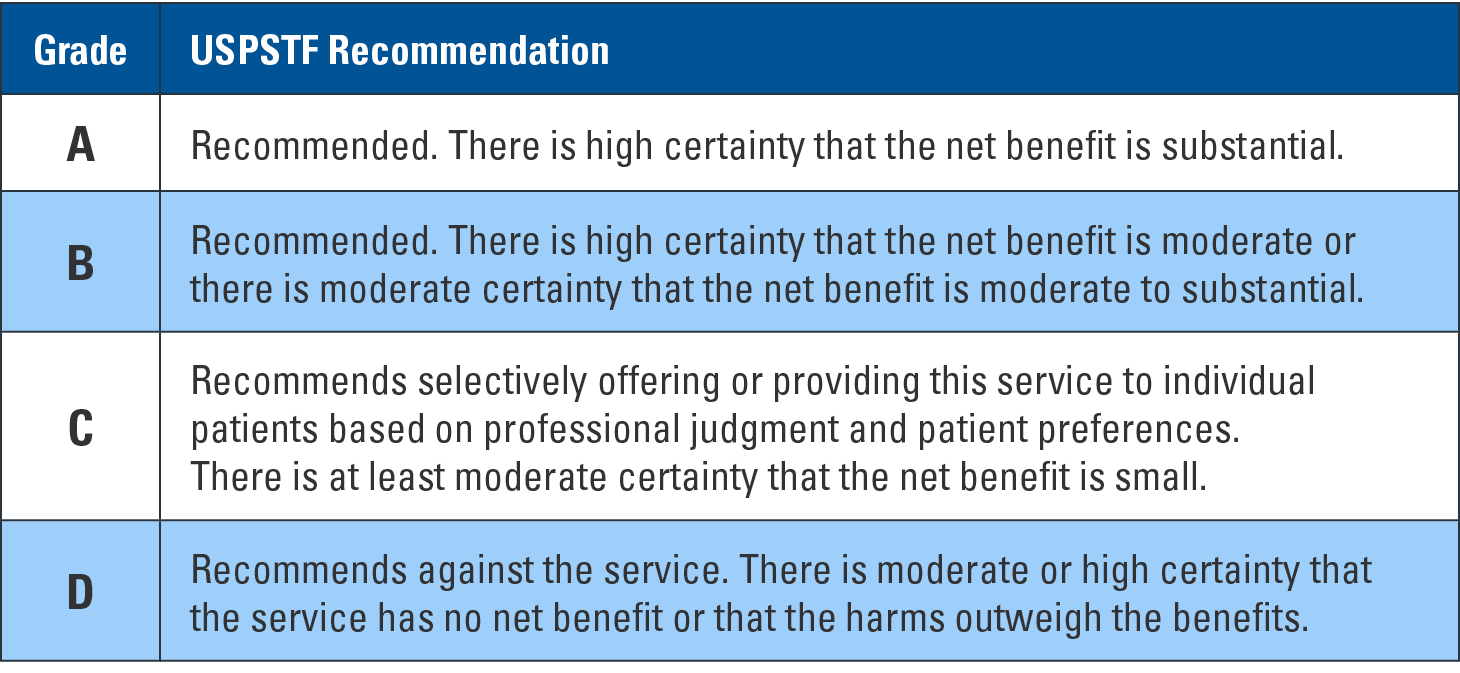
    USPSTF Recommendations Grade Legend Table

    Table 2

    USPSTF Recommendations Health Screening Grade Table

  • Blood Donation

    Woman giving bloodFive million people in the United States get blood transfusions each year. Thirty-six thousand units of red blood cells, 7,000 units of platelets and 10,000 units of plasma are transfused each day. More than 6.8 million donors supply 13.6 million units collected, which can be split up and used for multiple types of transfusions. But despite these large numbers, blood shortages still occur: 38% of the population is eligible to donate but less than 10% do so. The biggest reason people don’t donate is that the thought of doing so never occurs to them.

    Reasons why people may be ineligible to donate include anemia, hepatitis B or C, HIV or being at high risk for having HIV, and travel to destinations with high risk of infectious exposures. With some exceptions, those taking regular medications are generally eligible to donate blood. Prescription blood thinners (e.g., Coumadin, Eliquis, Xarelto, Pradaxa, Plavix) and prostate medications (e.g., Avodart, Propecia, Proscar) are examples of prohibited medications. Those undergoing estrogen replacement therapy are not prevented from donating.


    “Blood donation takes less than 90 minutes and is an easy way to help others.”


    If you have had basal and squamous cell cancers removed within the past 12 months you are still eligible to donate. Blood cancers cause ineligibility, but other cancers that have not recurred for 12 months after completing treatment are acceptable. If you have controlled diabetes and high blood pressure, you are also eligible to donate.

    People with congestive heart disease are generally excluded from donating. However, those with coronary heart disease may be acceptable donors if there have been no symptoms, heart attack, bypass operation or angioplasty for six months. At one time, it was thought that donating blood decreased one’s cardiac risk. Unfortunately, this theory has not held up in clinical trials. People with heart disease should consult their physician prior to donation.

    This is a brief list of criteria and by no means exhaustive. Blood donation takes less than 90 minutes and is an easy way to help others.

  • Shorter Could Be Better When It Comes to Antibiotics

    Nearly 1,700 years ago, Constantine the Great declared that there would be 7 days in a week. Today, that ancient decree remains a primary reference for duration of antibiotic therapy, leading physicians to treat infections in intervals of 7 days.

    While this has long been the standard duration of antibiotic treatment, it has never been established as the optimal duration. Now, a new clinical trial offers strong evidence that shorter courses of treatment are in fact just as effective as longer courses, specifically in the case of community-acquired pneumonia (CAP).


    “As shorter treatments can in turn lead to less antibiotic resistance, fewer adverse effects, lower cost and improved adherence, this is encouraging news indeed.”


    The study set out to validate the Infectious Diseases Society of America (IDSA) and American Thoracic Society (ATS) guidelines for duration of antibiotic treatment in CAP patients. These guidelines recommended a minimum 5-day course of treatment based on clinical stability criteria, as opposed to the standard antibiotic treatment of 7 to 14 days, which is based mainly on expert opinion.

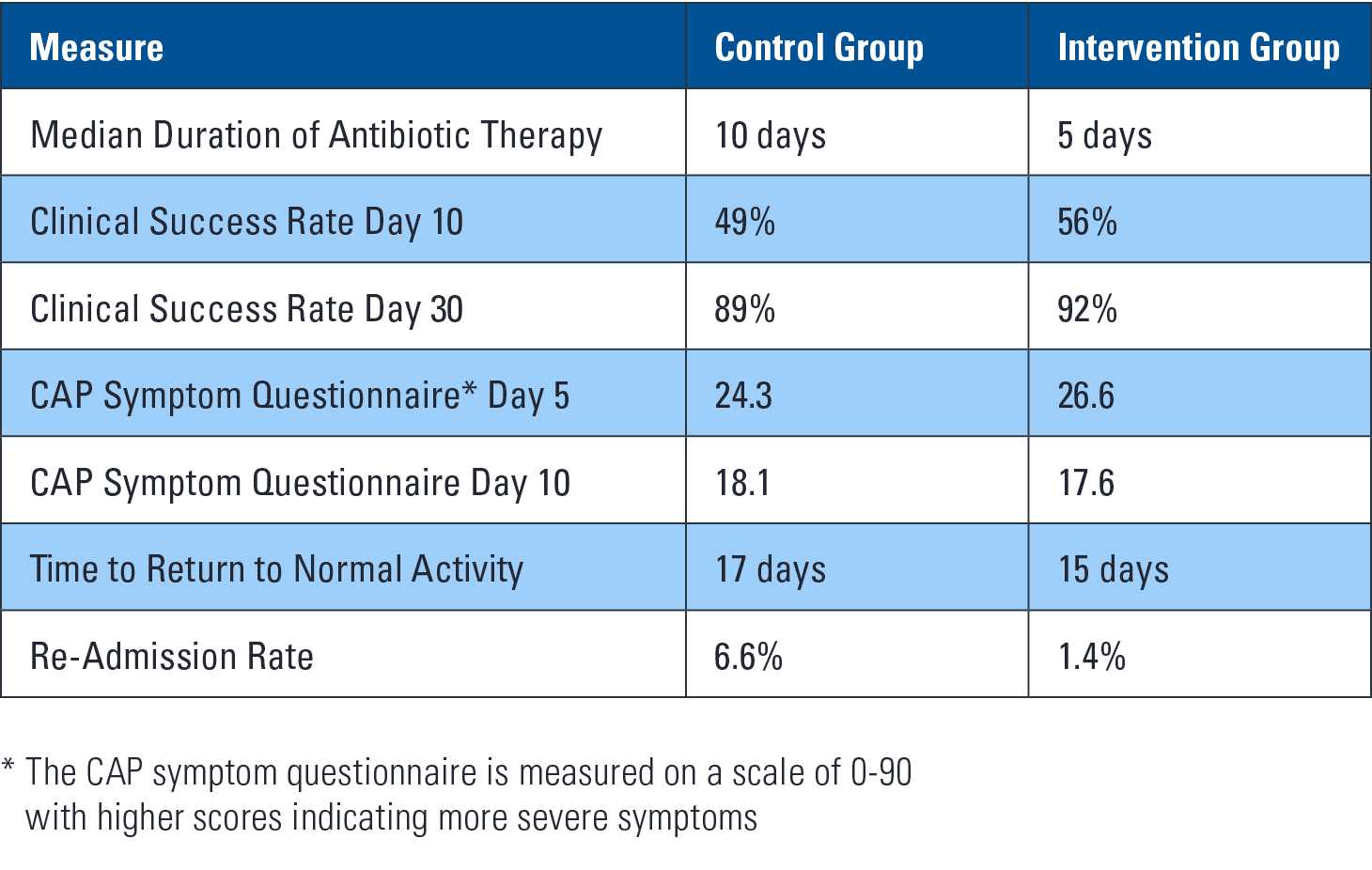
    312 patients were randomly placed in an intervention or control group. Those in the intervention group were treated according to the ISDA / ATS guidelines, while duration of antibiotic treatment for the control group was determined independently by physicians.


    Evaluating both the clinical success rate as well as patients’ scores on a CAP symptom questionnaire, the study showed little difference between the two groups. The duration of therapy, however, was much shorter for the intervention group (an average of 5 days compared to 10 for the control group). Those receiving a 5-day course of antibiotics saw no less improvement than those who received a 10-day course. The implications are significant not only for physicians treating CAP, but also suggest a better strategy for determining the duration of antibiotic treatment for all infections. By basing this decision on clinical response rather than arbitrary treatment lengths, physicians could significantly reduce treatment durations.

    As shorter treatments can in turn lead to less antibiotic resistance, fewer adverse effects, lower cost and improved adherence, this is encouraging news indeed.

  • Comparing Weight Loss Programs

    Apples, orange, lemon, pearWeight loss programs and diets are big business with $2.5 billion spent on these services in 2014. This is not surprising since 63% of adults have attempted to lose weight at some point. The largest three programs are Weight Watchers, Nutrisystem and Jenny Craig. How do the various programs stack up?
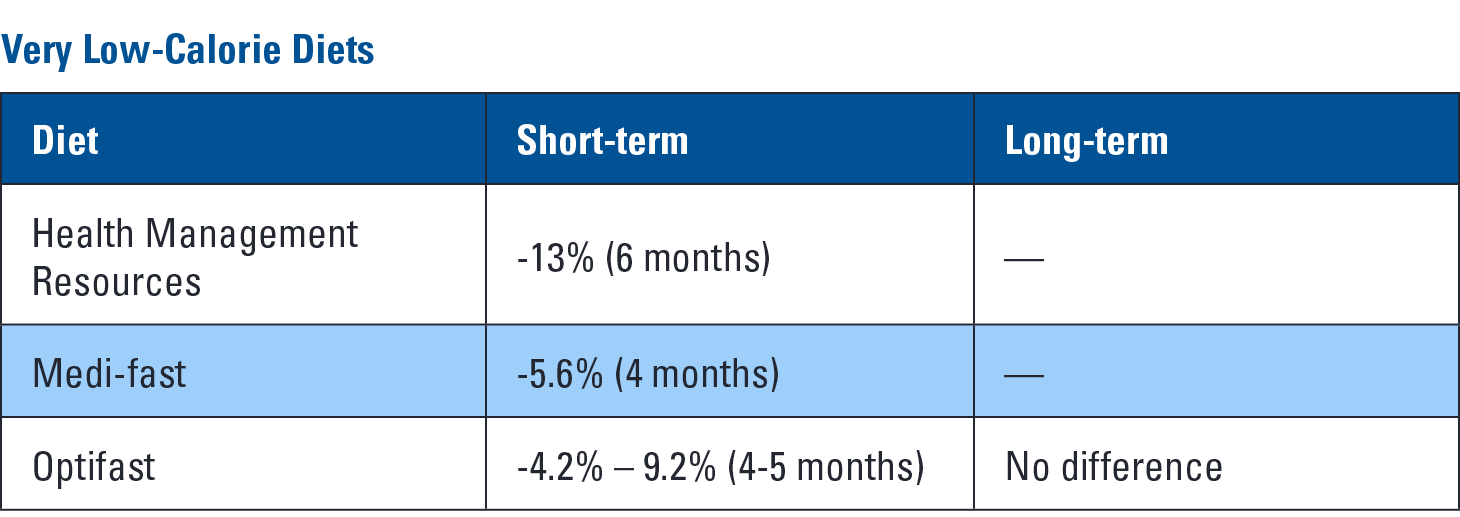
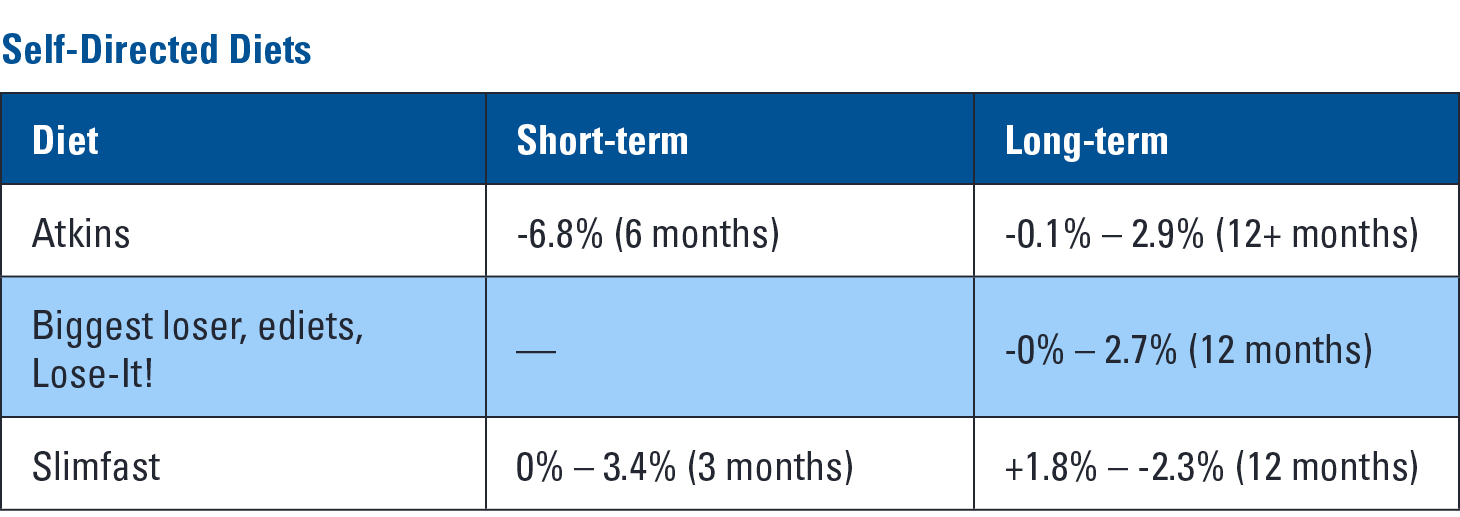
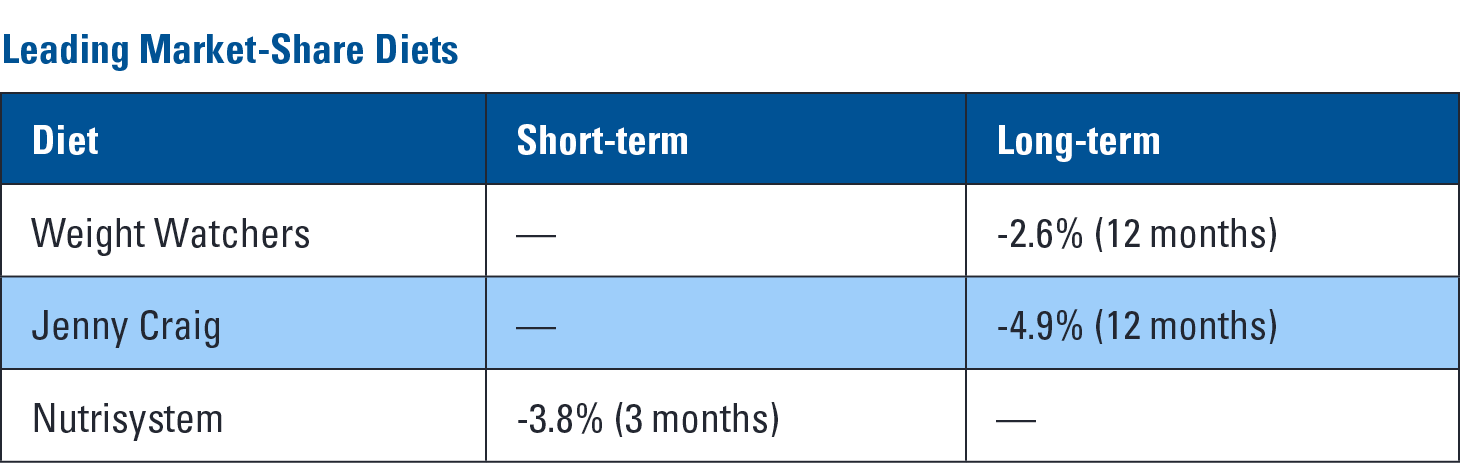
    One review looked at 141 different programs. They divided programs into very low-calorie diets (VLCD), self-directed diets and leading market-share programs (LMS). End-points were the amount of weight lost over the short-term (<12 months) and long-term (12+ months). Selected diets were compared with controlled education. Costs of the programs studied varied between zero and $682 per month. The review did not evaluate physical activity, behavioral and social support, medication or supplement use. The average age of people in the studies was 37–57 years old and the subjects were predominantly women. VLCD diets included were Health Maintenance Resources, Medi-fast and Opti-fast. Self-directed diets were Atkins, Biggest Loser, eDiets, LoseIT and Slimfast. LMS diets were Jenny Craig, Weight Watchers and Nutrisystem.


    “Weight Watchers was the most cost-effective diet while Jenny Craig had the greatest sustained weight loss. Nutrisystem was good at short-term weight loss.”


    Results are summarized in the table. Due to heterogeneity of the studies, it is difficult to compare the diets and only generalizations can be made. Weight Watchers was the most cost-effective diet while Jenny Craig had the greatest sustained weight loss. The VLCD were superior to other programs in the short term. Nutrisystem, grouped as a leading market share diet in this study, was good at short-term weight loss as well. No trials were continued to evaluate long-term effects. VLCD had triple the risk of gallstones compared to low-calorie diets. Results of the self-directed diets were mixed. Contemporary literature reflects social changes and thinking.

    These findings show that many programs are helpful in various settings and different programs have different short- and long-term outcomes. The authors conclude that Weight Watchers and Jenny Craig are the two best diets studied.

    Comparing Weight Loss Programs — Very Low-Calorie Diets Chart

    Comparing Weight Loss Programs — Self-Directed Diets

    Comparing Weight Loss Programs — Leading Market-Share Diets

  • Sedentary Time

    A woman relaxing with her dogOne way to view activity level and health outcome is to measure health outcomes based on amount of non-active time. However, caution must be used in interpretation because moderate activity as recommended is not necessarily the opposite of being sedentary. A meta-analysis assessed sedentary time with risk for disease, mortality and hospitalization. This, in combination with studies on moderate and vigorous activity, helps to provide a more complete picture of activity level and health outcomes.


    “Maintaining a minimum amount of physical activity and breaking up sedentary time with walks or non-sitting tasks would appear to be beneficial to health.”


    The study defined being sedentary as less than 1.5 METS (eg. sitting, watching TV, reclining) and evaluated overall hours of sedentary behavior or sitting hours per day or week. Out of almost 21,000 studies 41 met inclusion criteria. The analysis found that greater sedentary time was associated with all-cause mortality, cardiovascular disease incidence, cancer incidence and type 2 diabetes incidence. Of the cancers, breast, colon, colorectal, endometrial and epithelial ovarian cancers showed increased incidence. Further, sitting fewer than eight hours a day had a 14% lower risk for potentially avoidable hospital admissions. When evaluating sedentary time along with level of activity, there was a 30% less relative risk of all-cause mortality in those with high versus low levels of physical activity. It appears that there is an interaction between amount of non-activity and amount of activity, with those who are more physically active having less impact of sedentary time on their health.

    Based on this analysis, both activity and non-activity time is important. Currently guidelines do not state how much sedentary time is “acceptable.” The amount may be different if sitting at work versus sitting in leisure time. We also don’t know if being sedentary and awake longer is better or worse than sleeping more. Much more research is needed. In the meantime, maintaining a minimum amount of physical activity and breaking up sedentary time with walks or non-sitting tasks would appear to be beneficial to health.

  • General Physical Activities Defined by Level of Intensity

    Almost every occupation requires some mix of light, moderate, or vigorous activities, depending on the task at hand. To categorize the activity level of your own position, ask yourself: How many minutes each working day do I spend doing the types of activities described as light, moderate, or vigorous? To arrive at a total workday caloric expenditure, multiply the minutes spent doing activities within each intensity level by the kilocalories corresponding to each level of intensity. Then, add together the total kilocalories spent doing light, moderate, and vigorous activities to arrive at your total energy expenditure in a typical day. Use this handy chart to help calculate the calories burned based on your activities.